
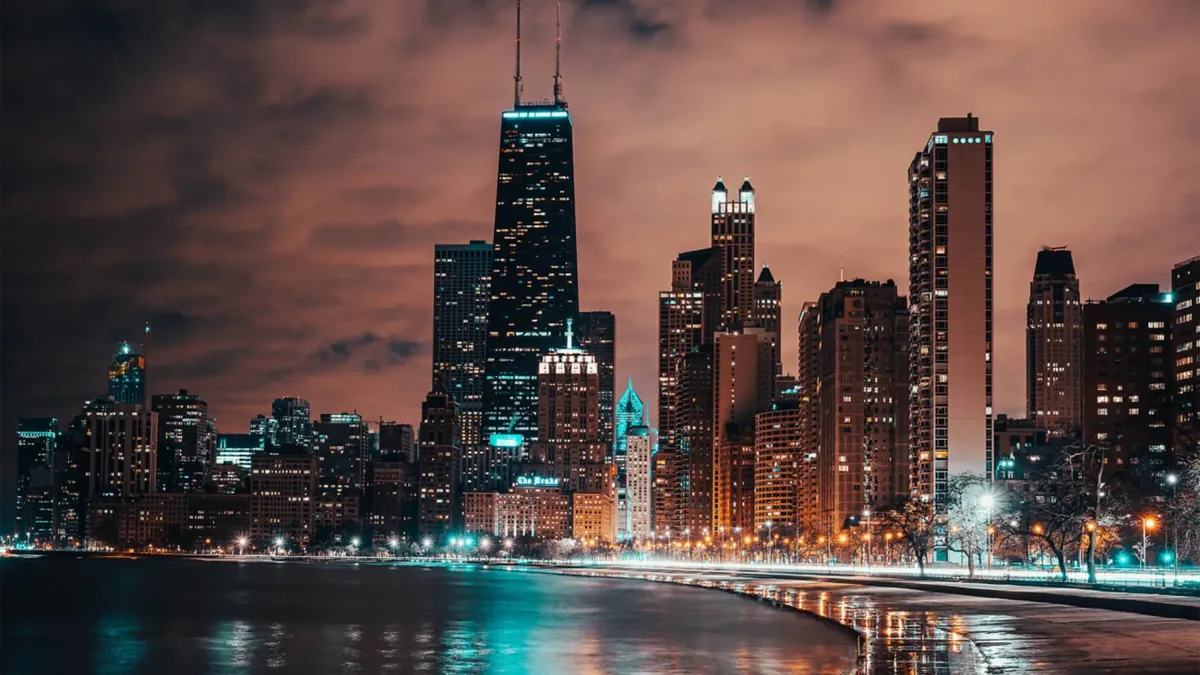
Coming to Chicago from another country? This Chicago travel guide for international visitors covers your whole trip. It starts before you fly. It walks you through landing at O'Hare, clearing customs and getting to your hotel. Then it covers where to stay, what to see, what to eat and how to get around. It ends with how to get back to the airport when it's time to go home.
Chicago is the third-largest city in the United States. It sits on the shore of Lake Michigan. It is known for its buildings, museums, food, music and friendly people. Most international visitors land at O'Hare International Airport (ORD), about 18 miles (29 km) northwest of downtown. That's where this guide begins.
Chicago Quick Facts
| Main airport | O'Hare International (ORD). Midway (MDW) is smaller and mostly domestic. |
|---|---|
| International arrivals | Terminal 5 at O'Hare |
| Time zone | Central Time (CT) |
| Currency | US dollar (USD) |
| Power | 120 volts, plug types A and B |
| Emergency number | 911 (police, fire, ambulance) |
| Language | English. Spanish is also widely spoken. |
| Tipping | 18% to 20% at sit-down restaurants |
| Driving | On the right side of the road |
| Tap water | Safe to drink |
The short version
- Get your travel approval early. Apply for an ESTA at least 72 hours before you fly, or a visa weeks ahead.
- Expect Terminal 5. Almost all international flights land there. You clear immigration, collect bags, then pass customs.
- Plan your ride before you land. Uber and Lyft cannot pick up at Terminal 5. Taxis and black cars can.
- Stay central on a first visit. The Loop, River North and the Magnificent Mile put you close to the main sights.
- Tip 18% to 20% at restaurants. Sales tax is added at the register.
Before You Fly: Visas, ESTA and Documents
Sort out your paperwork before you book anything else. Without the right travel approval, your airline will not let you board.
If Your Country Is in the Visa Waiver Program
Citizens of about 40 countries can visit the US for up to 90 days without a visa. This includes the UK, most of Europe, Japan, South Korea, Australia and New Zealand. You still need an approved ESTA (Electronic System for Travel Authorization).
- Apply only on the official site, esta.cbp.dhs.gov, or the official ESTA Mobile app.
- The fee is $40.27 per person, including children.
- Apply at least 72 hours before you fly. Most approvals come in minutes, but some take longer.
- An ESTA is good for two years, or until your passport expires.
Watch out for look-alike websites. They charge extra fees for the same form. If the price is higher than $40.27, you are not on the government site.
If You Need a Visa
Travelers from other countries need a US visitor visa. For most people this is a B-1 (business) or B-2 (tourism) visa. You apply through the US embassy or consulate in your country. This usually means an online form, a fee and an interview. Wait times for interviews can be long, so start early.
Canadian citizens usually do not need a visa for short visits.
Documents to Carry on the Plane
Keep these in your carry-on bag, not your checked bag:
- Your passport. Make sure it is valid for your whole trip.
- Your visa or ESTA approval (a screenshot is fine as a backup).
- Your hotel name and address.
- Your return or onward ticket.
- A credit card that works abroad.
- Your airport ride details, if you booked one.
Get Travel Health Insurance
Health care in the US is very expensive. A short hospital visit can cost thousands of dollars. Buy travel insurance that covers medical care before you leave home.
Landing at O'Hare: What Happens at Terminal 5
O'Hare has four terminals: 1, 2, 3 and 5. There is no Terminal 4. Our O'Hare terminal map shows how they fit together. Terminal 5 is the international terminal. Almost all international flights land there, even flights on United and American. Those airlines fly most domestic flights from Terminals 1 and 3, but their international arrivals come into Terminal 5.
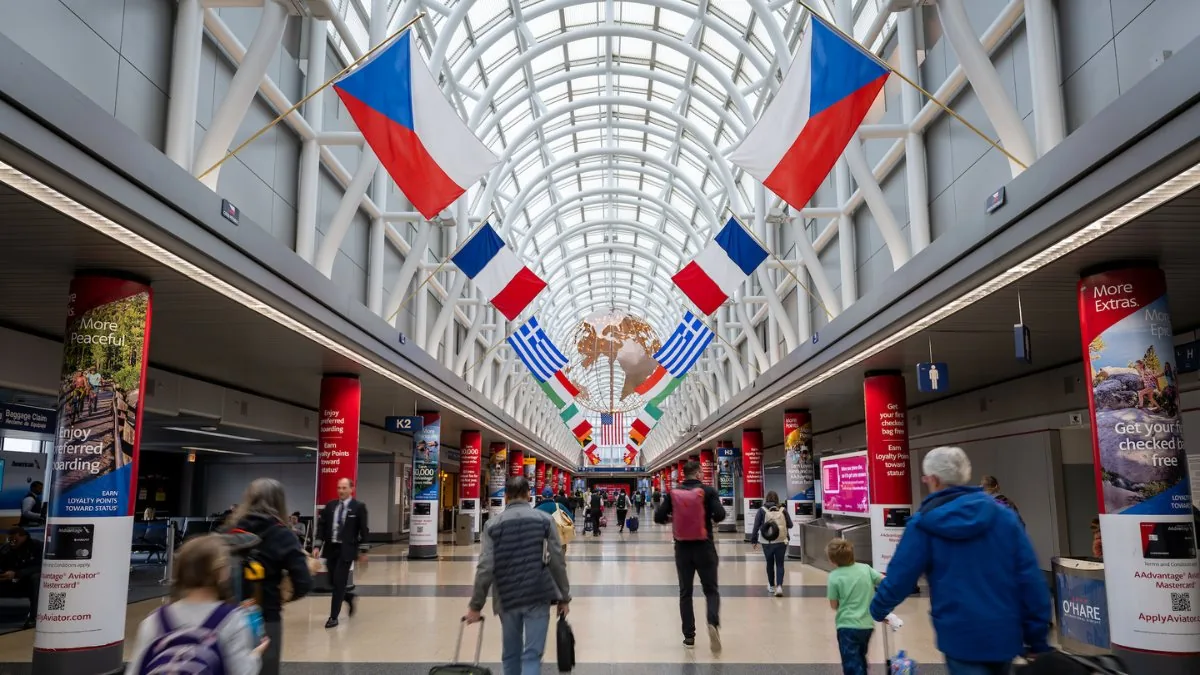
Here is what happens after you land, step by step.
Step 1: Immigration (Passport Control)
Follow the signs to Passport Control. There are separate lines for US citizens and residents, and for visitors. Get in the visitor line.
A US Customs and Border Protection (CBP) officer will check your passport and visa or ESTA. The officer may take your photo and fingerprints. They will ask simple questions, such as:
- Why are you visiting?
- How long will you stay?
- Where are you staying?
Answer clearly and honestly. Have your hotel address ready. Keep your answers short.
US citizens, green card holders and some visitors can use the free Mobile Passport Control app or Global Entry kiosks to move faster. Check if you qualify before your trip.
Step 2: Collect Your Bags
After passport control, go to baggage claim and pick up all of your checked bags. You must do this even if you have a connecting flight to another US city.
Step 3: Customs
Next, you walk through customs with your bags. You must declare:
- Food, especially fruit, vegetables, meat and dairy
- Plants, seeds and soil
- Cash of $10,000 or more (in any currency, all combined)
- Gifts or items you will leave in the US above your duty-free limit
When in doubt, declare it. Declaring an item is not a problem. Hiding it can lead to large fines.
Step 4: Exit Into the Arrivals Hall
After customs, you walk out into the Terminal 5 arrivals hall on the lower level. This is where friends and family wait. If you booked a meet-and-greet ride, your driver waits at the terminal door holding a sign with your name.
How Long Does All This Take?
It depends on the time of day. On a quiet day, you may be out in 30 minutes. When several large flights land at once, it can take 90 minutes or more. Busy times often follow waves of flights from Europe and Asia in the afternoon. Tell the person picking you up to track your flight and expect some wait.
Flights From Canada, Ireland and Some Caribbean Airports
Some airports outside the US have US Preclearance. This includes major airports in Canada, plus Dublin and Shannon in Ireland and a few in the Caribbean. You clear US immigration and customs there, before you board.
When you land at O'Hare, you arrive like a domestic passenger. You may land at Terminal 1, 2, 3 or 5. You walk straight to baggage claim with no lines. Our guide to Preclearance Flights to O'Hare: Which Terminal You Land At explains which airports this applies to.
Connecting to Another US City
If Chicago is not your final stop, here is what to do:
- Clear immigration and customs at Terminal 5.
- Drop your bags at the airline's bag recheck belt right after customs.
- Take the Airport Transit System (ATS) train to your next terminal.
- Go through TSA security again.
The ATS is a free train. It runs 24 hours a day and links all terminals, the rental car center and the Metra train station. Give yourself plenty of time for this. If your two flights are on separate tickets, allow at least three hours.
Money, Phone and Wi-Fi at the Airport
- Wi-Fi: O'Hare has free Wi-Fi in all terminals.
- Cash: ATMs are in every terminal. Currency exchange counters are there too, but their rates are poor. Use an ATM or your card instead.
- Phone: Buy an eSIM before you leave home, or pick up a prepaid SIM in the city. Airport shops charge more.
- Luggage carts: Carts are available. There is usually a small fee.
Getting From O'Hare to Your Hotel
After a long international flight, the last thing you want is to figure out a new city with heavy bags. Here are your options, from easiest to cheapest. For drive times to each part of the city, see O'Hare to downtown Chicago.
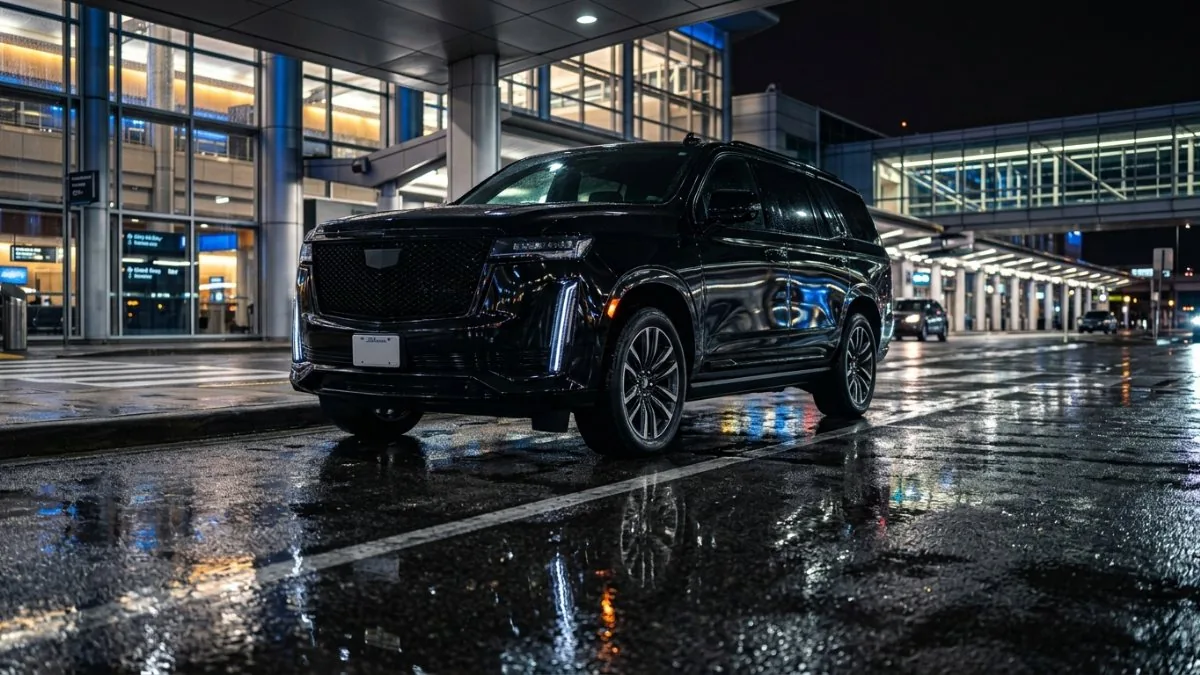
Private Car or Limo (Easiest)
A private car is the simplest way to get to your hotel after a long flight. With O'Hare Limo Service, it works like this:
- You book ahead and give us your flight number.
- We track your flight, so we know if you land early or late.
- With meet and greet, your chauffeur waits at the Terminal 5 door after customs, holding a sign with your name. This adds a small greeting fee.
- At Terminal 5, we include 90 minutes of free wait time to cover the customs line.
- The chauffeur helps with your bags and walks you to the car at the curb.
- You pay a flat rate that you know before you book. No meter, no surge pricing. Sedans start at $89 one way to the Loop. Tolls are included. Tip is extra. See our flat rates.
Private cars are also the best choice for families with car seats, groups with lots of luggage and business travelers heading straight to a meeting. Child seats are free with 24 hours' notice. We have sedans, luxury SUVs and Sprinter vans for larger groups.
Taxi
Taxi stands are on the lower level outside every terminal, including Terminal 5. Chicago taxis use a meter. A ride to downtown usually costs about $40 to $60 before tip. Traffic can push the price higher. Taxis take credit cards. Tip about 15% to 20%.
Uber and Lyft (Rideshare)
Rideshare apps work at O'Hare, but pickup is not at Terminal 5. If you land at Terminal 5, you must take the ATS train to Terminal 2. Then go to the rideshare pickup zone on the upper level. There is also a rideshare zone on the upper level of Terminal 3.
With bags, this adds time and walking. We explain the walk in our guide to Uber and Lyft Pickup at O'Hare: Where to Go. Prices also jump when demand is high, such as when many flights land at once.
CTA Blue Line Train (Cheapest)
The CTA Blue Line runs from O'Hare straight to downtown Chicago. It runs 24 hours a day.
- Where: The station is under the main parking garage. Walk to it through tunnels from Terminals 1, 2 or 3. From Terminal 5, take the ATS train to Terminal 2 first.
- Cost: $5 from O'Hare. Tap a contactless credit card or your phone at the gate, or buy a ticket from a machine.
- Time: About 40 to 45 minutes to the Loop.
The Blue Line is cheap and avoids traffic. But it can be crowded, and many downtown stations have stairs. It's harder with large suitcases, small kids or late at night.
Metra Commuter Train
Metra runs trains from O'Hare's Multi-Modal Facility to Union Station downtown. Take the ATS to get there. Service is limited and mostly on weekdays, so check the schedule first.
Rental Car
Rental cars are at the Multi-Modal Facility, also reached by the ATS. A car makes sense if you plan to leave the city. For a downtown stay, it usually does not. Downtown hotel parking is expensive, and you won't need a car to see the main sights.
O'Hare to Downtown: Quick Comparison
| Option | Time to downtown | Typical cost | Best for |
|---|---|---|---|
| Private car | 30 to 60 min | Flat rate, sedans from $89 | Families, groups, long flights, business |
| Taxi | 30 to 60 min | About $40 to $60 plus tip | Quick rides with no booking |
| Uber / Lyft | 30 to 60 min | Changes with demand | Light travelers |
| CTA Blue Line | 40 to 45 min | $5 | Solo travelers with light bags |
| Metra | About 30 min | Low | Weekday travelers near Union Station |
Travel times by car depend on traffic. Weekday rush hours are roughly 7 to 9 a.m. and 4 to 7 p.m.
Chicago Basics for First-Time Visitors
A few everyday things work differently in the US. Knowing them ahead of time saves stress.
Money and Taxes
The US dollar is the only currency used. Credit and debit cards are accepted almost everywhere. Tap-to-pay works in most shops, restaurants and taxis. Carry a little cash for tips and small purchases.
Prices on menus and shelves do not include tax. Tax is added at the register. In Chicago, sales tax is a bit over 10%. Hotel taxes are higher, around 17% to 19% in downtown hotels. The US has no tax refund for visitors, so you cannot claim sales tax back at the airport.
Tipping in Chicago
Tipping is expected in the US. Service workers depend on it.
| Service | Normal tip |
|---|---|
| Sit-down restaurant | 18% to 20% of the bill before tax |
| Bartender | $1 to $2 per drink, or 18% to 20% of the tab |
| Taxi or rideshare | 15% to 20% |
| Chauffeur | 15% to 20%, unless included in your rate |
| Hotel housekeeping | $3 to $5 per night |
| Hotel bell staff | $1 to $2 per bag |
| Coffee shop counter | Optional, $1 or so |
Some restaurants add a service charge to the bill, especially for large groups. Check the bill so you don't tip twice.
Power and Plugs
The US uses 120 volts and plug types A and B (flat pins). Bring an adapter. Most phone and laptop chargers work on 120 volts, but check the label on hair dryers and straighteners.
Phones and Internet
Buy a US eSIM before you leave, or check your home plan's roaming rates. Free Wi-Fi is common in hotels, cafes, the airport and many public places.
Dates, Weather and Measurements
The US writes dates as month/day/year. So 10/09 means October 9, not September 10. Temperatures are in Fahrenheit. Distances are in miles, and weights are in pounds.
A quick guide: 32 degrees F is freezing (0 degrees C). 50 degrees F is cool (10 degrees C). 70 degrees F is pleasant (21 degrees C). 90 degrees F is hot (32 degrees C).
Rules to Know
- Drinking age: You must be 21 to buy or drink alcohol. Bars and shops check ID. Bring your passport.
- Smoking: Smoking is banned inside restaurants, bars and most public buildings.
- Cannabis: It is legal for adults 21 and over in Illinois, but not in public places. Never bring it to the airport or across any border.
- Crossing the street: Use crosswalks and wait for the walk signal. Cars can turn right on red at many corners, so look before you step out.
If You Get Sick
Call 911 for emergencies. For minor problems, go to an urgent care clinic. They cost far less than a hospital emergency room. Pharmacies like Walgreens and CVS are on almost every busy street downtown. Many are open late.
When to Visit Chicago
Chicago has four real seasons. Each one feels like a different city.
Spring (March to May)
Temperatures run from the 40s to the 60s degrees F (about 4 to 18 degrees C). The weather changes fast. One day is sunny and warm, the next is cold and rainy. Bring layers. Crowds are smaller and hotel prices are lower than summer.
Summer (June to August)
Summer is Chicago at its best and busiest. Highs are usually in the 80s degrees F (27 to 30 degrees C). There are street festivals nearly every weekend, free concerts in Millennium Park and beaches open along the lake. Big events include Lollapalooza and the Chicago Air and Water Show in August. Hotels cost the most in summer, so book early.
Fall (September to November)
September and October are some of the nicest months. The air is cool and clear, and the leaves change color. The Chicago Marathon takes place in October and fills hotels that weekend. By November, it gets cold.
Winter (December to February)
Winter is cold, windy and often snowy. Daytime highs are often around freezing, and nights can drop well below. The wind off the lake makes it feel colder. If you visit in winter, bring a warm coat, hat, gloves and waterproof shoes.
Winter has its upside. Hotels are cheaper and museums are quiet. The holiday lights on Michigan Avenue and the Christkindlmarket (a German-style holiday market) are worth seeing in December.
Traveling around Thanksgiving, Christmas or New Year's? See our O'Hare Holiday Travel Guide for tips on crowds and timing.
Where to Stay in Chicago: Best Neighborhoods for Visitors
Chicago is a big city made up of many neighborhoods. Where you stay shapes your whole trip. For a first visit, stay downtown or close to it. You'll be able to walk to most of the main sights.
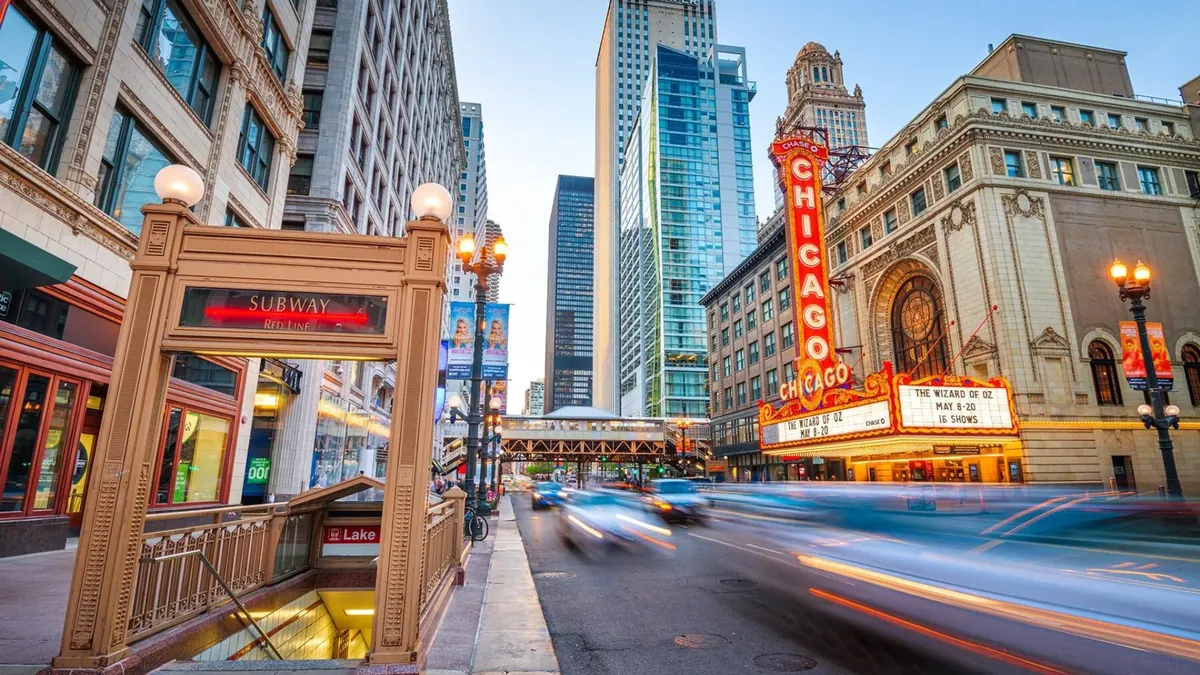
The Loop
The Loop is downtown Chicago. It's named after the elevated train tracks that circle it. Here you'll find Millennium Park, the Art Institute, the Theater District and the Riverwalk. It's easy to reach by train from O'Hare on the Blue Line. We also cover rides to every downtown Chicago hotel.
The Loop is busy on weekdays and quieter at night and on weekends.
Best for: First-time visitors, sightseeing, business travelers.
River North
Just north of the river, River North is packed with restaurants, bars, art galleries and hotels. It's lively day and night.
Best for: Food, nightlife and being in the middle of everything.
Magnificent Mile and Streeterville
The Magnificent Mile is the stretch of Michigan Avenue north of the river. It's lined with shops, department stores and big hotels. Streeterville sits just east of it, near the lake and Navy Pier.
Best for: Shopping, first-timers, families and lake views.
Gold Coast
North of the Magnificent Mile, the Gold Coast has elegant old homes, upscale shops and quiet tree-lined streets. Oak Street Beach is a short walk away.
Best for: A quieter, upscale stay close to downtown.
West Loop
Once a warehouse district, the West Loop is now the heart of Chicago's food scene. Randolph Street and Fulton Market are full of top restaurants. It has many newer hotels.
Best for: Food lovers and a modern, stylish stay.
South Loop and Museum Campus
The South Loop sits next to the Museum Campus and McCormick Place, the city's giant convention center. Going to a trade show? See O'Hare to McCormick Place. Hotels here often cost less than those further north.
Best for: Museum visits, conventions and better value.
Lincoln Park
Lincoln Park is a leafy neighborhood on the North Side. It has a free zoo, a big lakefront park, and plenty of cafes and shops. It has fewer hotels, but it feels more like local Chicago. We serve Lincoln Park too.
Best for: Couples, repeat visitors and a relaxed pace.
Wicker Park and Bucktown
These neighborhoods have independent shops, cafes, bars and live music. They sit right on the Blue Line, so you can ride the train straight from O'Hare.
Best for: Younger travelers and those who want a local feel.
Near O'Hare (Rosemont)
If you have a short stay, an early flight or a conference near the airport, stay in Rosemont. It's right next to O'Hare and has many hotels, the Fashion Outlets of Chicago and the Donald E. Stephens Convention Center. Downtown is 30 to 60 minutes away by car or train.
Best for: Layovers, early flights and airport-area events. See our guide on where to stay near O'Hare before an early flight.
Quick Neighborhood Guide
| Neighborhood | Best for | Feel |
|---|---|---|
| The Loop | Sightseeing, business | Busy weekdays, quiet nights |
| River North | Food and nightlife | Lively |
| Magnificent Mile / Streeterville | Shopping, families | Central, polished |
| Gold Coast | Upscale stays | Quiet, elegant |
| West Loop | Restaurants | Trendy |
| South Loop | Museums, value | Relaxed |
| Lincoln Park | Parks, local life | Leafy, calm |
| Wicker Park / Bucktown | Shops, music | Creative, local |
| Rosemont | Airport access | Convenient |
Chicago Hotels: What to Know Before You Book
Chicago has every kind of hotel, from historic grand hotels to budget chains. Keep these points in mind when you book.
- Look at the full price. The price you first see often does not include taxes. Some hotels also add a nightly "destination fee" or "amenity fee." Check the total before you pay.
- Parking costs extra. Downtown hotel parking can be very expensive. Another reason to skip the rental car.
- Expect a card hold. Hotels place a temporary hold on your credit card at check-in to cover extras.
- Check-in and check-out. Check-in is usually around 3 or 4 p.m. Check-out is usually 11 a.m. or noon. If you land early in the morning, ask the hotel to hold your bags until your room is ready.
- Stay near a train station. A hotel near an "L" station makes it easy to get around.
A few well-known hotels, as examples of what each area offers:
- The Drake (Gold Coast): a classic hotel at the top of the Magnificent Mile, facing the lake.
- The Peninsula Chicago (Magnificent Mile): a luxury stay just off Michigan Avenue.
- Chicago Athletic Association (The Loop): a restored historic building right across from Millennium Park.
- Hilton Chicago (South Loop): a large historic hotel facing Grant Park, near the museums.
- Hilton Chicago O'Hare Airport: inside the airport grounds, a walk from Terminals 1, 2 and 3.
Planning to use a vacation rental like Airbnb? Chicago adds an extra tax on these stays, and the rules for hosts are strict. Book only listings with clear reviews and a clear total price.
Top Things to Do in Chicago
You could spend weeks in Chicago and not see it all. These are the sights most first-time visitors love.
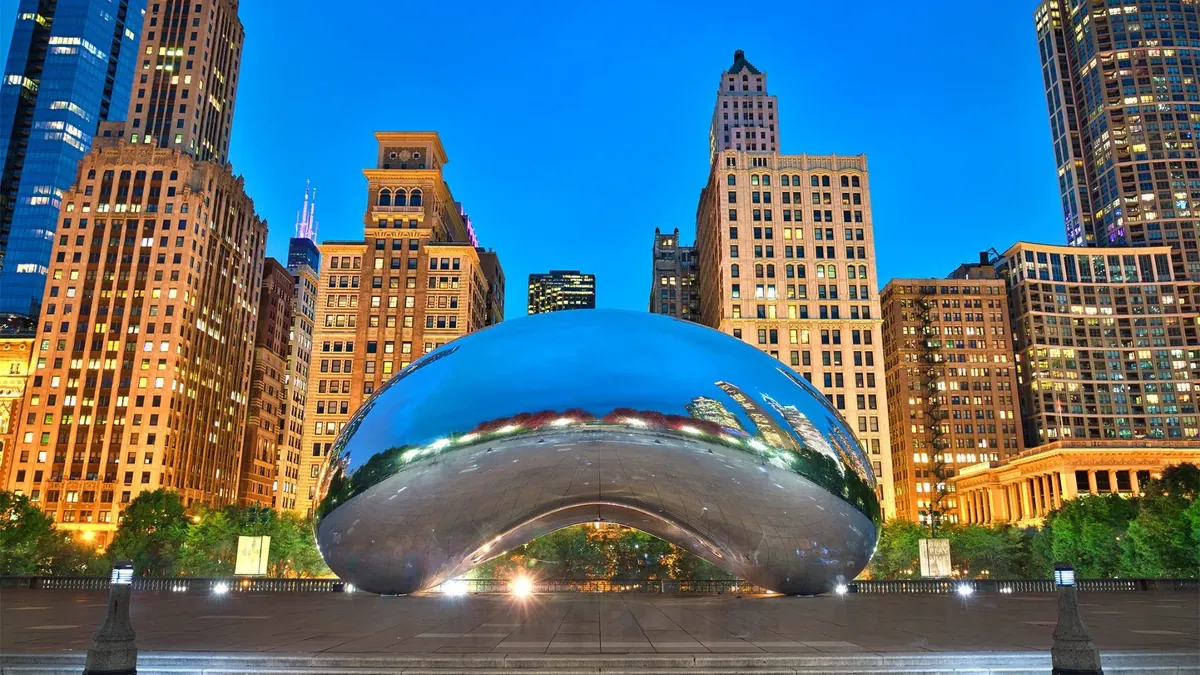
Millennium Park and Cloud Gate ("The Bean")
Millennium Park is the city's front yard. Its most famous piece is Cloud Gate, a giant mirror-like sculpture locals call "The Bean." Nearby is Crown Fountain, where faces on two glass towers spray water in summer. The outdoor stage hosts free concerts on summer evenings. The park is free to visit.
The Art Institute of Chicago
Right next to Millennium Park is one of the best art museums in the world. It holds famous works such as "Nighthawks," "American Gothic" and Seurat's "A Sunday on La Grande Jatte." It also has a huge collection of French Impressionist paintings. Plan at least half a day.
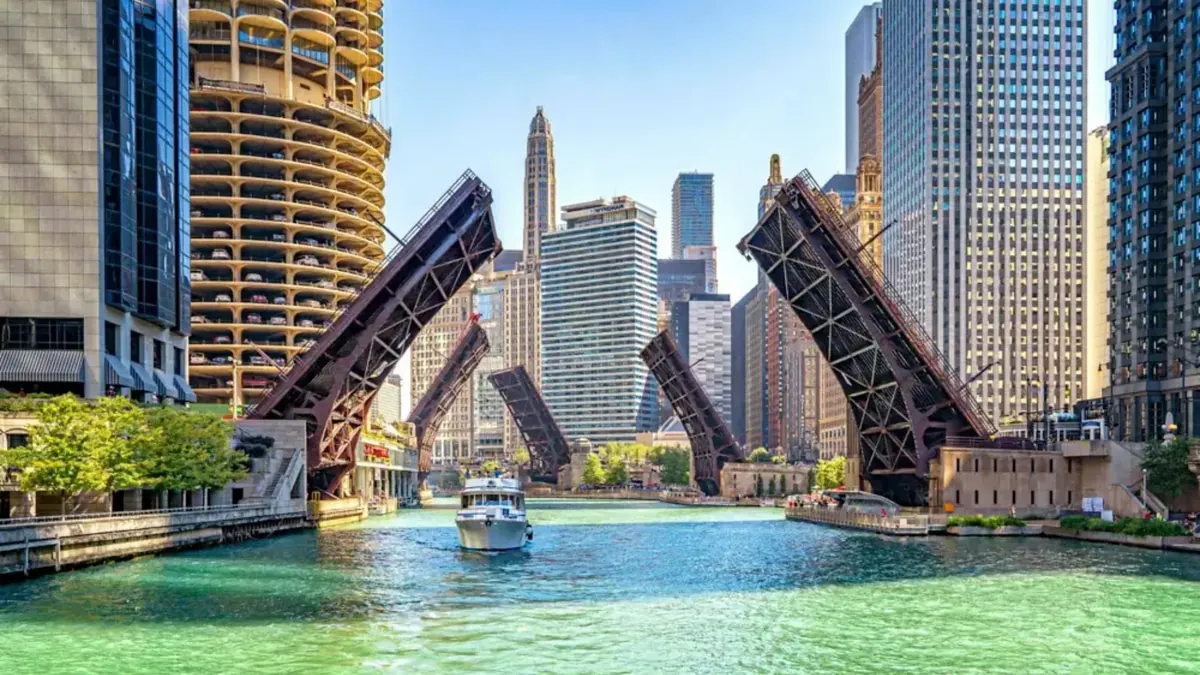
Chicago Architecture River Cruise
If you do only one tour in Chicago, make it this one. Guided boat tours run along the Chicago River and point out the city's famous buildings. You'll learn how Chicago rebuilt after the Great Fire of 1871 and became the home of the modern skyscraper. Tours run from spring through fall and last about 75 to 90 minutes. Book ahead in summer.
The Chicago Riverwalk
The Riverwalk is a path along the south bank of the river, right in the heart of downtown. It has cafes, wine bars, boat rentals and great views of the buildings above. It's a nice place to walk after dinner.
Museum Campus
Three major museums sit together on the lakefront, with great skyline views:
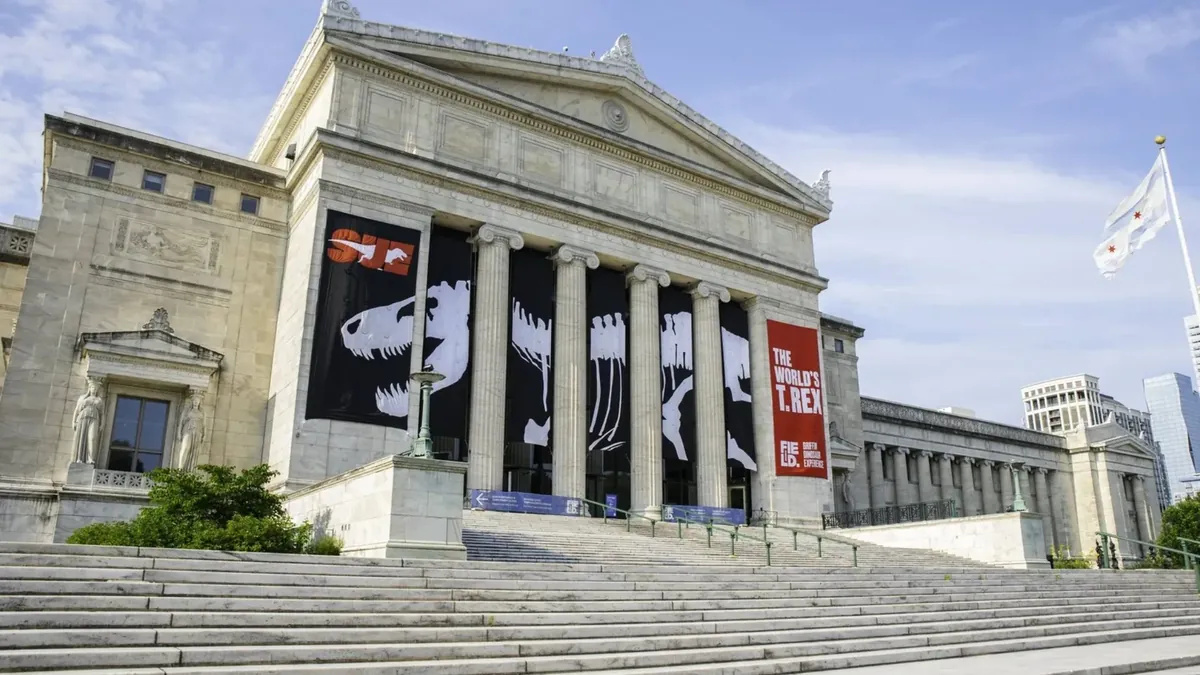
- The Field Museum: natural history, including SUE, one of the most complete T. rex skeletons ever found.
- Shedd Aquarium: sea life from around the world, from beluga whales to sharks.
- Adler Planetarium: space and astronomy, with sky shows.
If you plan to visit several paid attractions, look at a multi-attraction pass. It can save money.
Skyscraper Views: Willis Tower and 360 Chicago
For the best views of the city, go up high. The Skydeck at Willis Tower has glass boxes that stick out from the 103rd floor. You can stand over the street far below. 360 Chicago, on Michigan Avenue, has views over the lake and the Magnificent Mile. Go near sunset for day and night views in one visit.
Navy Pier
Navy Pier stretches into Lake Michigan. It has the Centennial Wheel, restaurants, boat tours and fireworks on some summer nights. It's free to enter and popular with families.
The Lakefront Trail and Beaches
The Lakefront Trail runs about 18 miles along Lake Michigan. Walk it, run it or rent a bike. In summer, the city's beaches fill with swimmers and sunbathers. North Avenue Beach and Oak Street Beach are the closest to downtown. Only swim at open beaches when lifeguards are on duty. The lake can be dangerous.
Lincoln Park Zoo
Lincoln Park Zoo is one of the oldest zoos in the country, and it's free. It's a great half-day with kids, and it pairs well with a walk through the park.
Museum of Science and Industry
On the South Side in Hyde Park, this huge museum is a favorite for families. You can walk through a real German submarine captured in World War II, see a coal mine and explore hands-on science exhibits.
Baseball at Wrigley Field
Seeing a Cubs game at Wrigley Field is a classic Chicago experience, even if you don't follow baseball. The ballpark opened in 1914 and is famous for its ivy-covered walls. The season runs from spring to early fall. The White Sox also play on the South Side.
Live Blues, Jazz and Comedy
Chicago blues is world-famous. Clubs like Buddy Guy's Legends and Kingston Mines have live music most nights. For jazz, the Green Mill in Uptown has been open since 1907. For comedy, The Second City has trained many famous comedians and runs shows nightly.
Shopping on the Magnificent Mile
Michigan Avenue has department stores, big brand shops and malls. State Street in the Loop has more shopping. The Fashion Outlets of Chicago in Rosemont is close to O'Hare, so it's easy to visit before a flight.
What to Eat in Chicago
Chicago is a serious food city. Try these local favorites at least once.
- Deep-dish pizza: a thick, buttery crust filled with cheese and topped with tomato sauce. It takes 30 to 45 minutes to bake, so expect to wait. One slice is often enough.
- Tavern-style pizza: thin and crispy, cut into squares. Many locals actually prefer this to deep dish.
- Chicago-style hot dog: a beef hot dog on a poppy seed bun with mustard, onions, relish, tomato, a pickle spear, peppers and celery salt. Locals say never add ketchup.
- Italian beef: thin slices of seasoned beef on a roll, dipped in its juices, with sweet peppers or spicy giardiniera.
- Garrett Popcorn: try the "Chicago Mix" of caramel and cheese popcorn together.
Chicago is also a city of immigrants, and its neighborhoods show it. Try Mexican food in Pilsen and Little Village, dim sum in Chinatown, Indian and Pakistani food on Devon Avenue, Greek food in Greektown and Italian food on Taylor Street.
For popular restaurants, book a table ahead using apps like OpenTable or Resy, especially on weekends.
Getting Around Chicago
Downtown Chicago is easy to explore on foot. For longer trips, you have several choices.
Learn the Grid
Chicago's streets follow a simple grid. The center point is the corner of State Street and Madison Street. House numbers count up from there. Every 800 numbers is about 1 mile. And one easy rule: Lake Michigan is always to the east.
Trains and Buses (CTA)
The CTA runs eight "L" train lines, named by color, and many bus routes.
- A train ride costs $2.50. A bus ride costs $2.25.
- Pay by tapping a contactless card or phone, or use a Ventra card or the Ventra app.
- Passes give you unlimited rides: 1 day for $5, 3 days for $15, 7 days for $20.
- The Blue Line and Red Line run 24 hours a day.
Bikes and Scooters
Divvy is Chicago's bike share. You'll find docks all over the city. Rent a bike or e-bike with the app. It's a great way to ride the Lakefront Trail.
Water Taxis
In warmer months, water taxis run along the Chicago River. They're a fun and quick way to get between downtown, Chinatown and other stops.
Taxis, Rideshare and Private Cars
Taxis and rideshare cars are easy to find downtown. For day trips, business meetings or a night out, you can also book a private car by the hour. Your driver waits for you between stops, so there's no need to wait for a new ride each time.
Driving
You can drive in Chicago, but most visitors don't need to. Traffic is heavy, parking is expensive and some highways charge tolls. Save the car for trips outside the city.
Staying Safe in Chicago
Chicago is a big city, and it has crime, like any big city. The areas most visitors spend time in are busy and generally safe. Use the same common sense you would anywhere:
- Keep your phone and wallet close, especially on crowded trains.
- Stay in busy, well-lit areas at night.
- Avoid empty parks and side streets after dark.
- Late at night, take a car instead of the train.
- Keep your passport in the hotel safe. Carry a photo of it on your phone.
- Only swim at beaches with lifeguards on duty.
- In winter, dress warmly. Frostbite can happen fast in extreme cold.
If you need help, call 911. For non-emergencies, ask hotel staff. They know the area well.
A Simple 3-Day Chicago Plan
Short on time? This plan covers the highlights.
Day 1: Downtown and the river. Start at Millennium Park and see The Bean. Spend the late morning at the Art Institute. After lunch, take an architecture river cruise. Walk the Riverwalk, then have deep-dish pizza for dinner.
Day 2: Museums and views. Spend the morning at the Field Museum or Shedd Aquarium. Walk along the lakefront for skyline views. Go up Willis Tower near sunset. End the night at a blues club.
Day 3: Neighborhoods. Visit Lincoln Park Zoo in the morning. In the afternoon, head to Wrigley Field for a game or tour, or explore Wicker Park's shops and cafes. Finish on the Magnificent Mile with dinner and the view from 360 Chicago.
Going Home: Getting Back to O'Hare
When your trip ends, plan your ride back to the airport carefully. Missing an international flight is costly.
- Check your terminal. Your departure terminal may not be the one you arrived at. United international flights often leave from Terminal 1, and American from Terminal 3. Many other airlines leave from Terminal 5. Check your airline's app the day before.
- Arrive 3 hours early. Be at the airport 3 hours before an international flight. You need time for check-in, bag drop and security.
- Allow for traffic. The drive from downtown can take 30 minutes on a quiet night and 90 minutes at rush hour. The main highway, the Kennedy Expressway (I-90), backs up often. See our guide on how early to leave for O'Hare.
- Book your ride ahead. For early morning flights, book your car the day before. We'll pick you up at your hotel door and get you to the right terminal on time.
There is no exit passport check when leaving the US. Your airline records your departure for you.
Final Tips From Our Chicago Travel Guide for International Visitors
Chicago is a great first stop in the United States. Get your ESTA or visa sorted early. Know what to expect at Terminal 5. And plan how you'll get to your hotel before you land. Those three steps take most of the stress out of arriving.
After that, the city is yours to enjoy. Walk the lakefront, take the river cruise, eat the deep dish and see a game at Wrigley. Chicago is friendly, easy to get around and full of things to do.
We hope this Chicago travel guide for international visitors makes your first trip easier. When you're ready, book your O'Hare pickup with O'Hare Limo Service. We'll track your flight, meet you at the Terminal 5 door after customs and get you to your hotel in comfort. When it's time to go home, we'll get you back to O'Hare on time.
Landing at O'Hare from overseas?
Flight tracking, free wait time at Terminal 5 and a chauffeur waiting at the door after customs. Flat rates, 24/7.
Book Your PickupRelated reading: O'Hare meet and greet, terminal pickup guide, How Long From Gate to Baggage Claim at O'Hare?, and flying with kids from O'Hare.
A travel guide from O'Hare Limo Service, the flat-rate ORD car and limo service covering Chicago and the suburbs.